Man-riding winches: choosing a personnel winch safely
In short
- Raising people is a separate, tightly regulated category, never a duty to improvise with a pulling winch.
- The safety factor steps up, typically five to one for personnel against four to one for general lifting, and the winch must be built and certified for man riding.
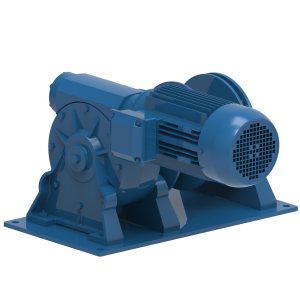
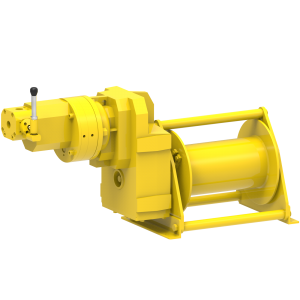
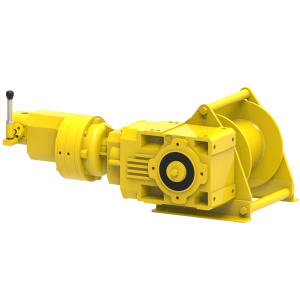
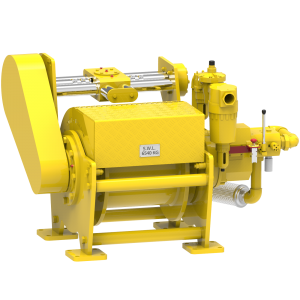
- We offer dedicated man riding winches in all three drives, electric MR 000E, hydraulic MR 000H and pneumatic MR 000P, so the right one fits the site and its atmosphere.
Few jobs concentrate the mind like lifting a person. The moment a winch raises or lowers people rather than steel, it leaves the world of ordinary lifting and enters a separate, tightly regulated category. This is not a place for a pulling winch pressed into service, a spare unit with a seat clipped on, or a bargain bought on price. It is the world of purpose built man riding equipment, and the rules around it exist because the consequence of failure is a life, not a dropped load.
Lifting people is a different category
The defining rule of man riding is simple to state and hard to engineer: the load must never be allowed to fall, even if a single component lets go. That demands redundancy in the parts that matter, a brake that holds without power, controlled descent, and protection against a slack rope or an overspeed. It also demands certification and traceability, a documented chain that proves the equipment was designed, tested and maintained for carrying people. A general winch, however strong, is built to none of this, which is why swapping it in for personnel work is both unsafe and, in most jurisdictions, unlawful.
The numbers change: safety factors and standards
The clearest difference is the safety factor. General lifting commonly works to a factor of four to one between the rope strength and the working load, while raising people steps that up, typically to five to one under rules such as DNV 2.7-1, and adds the requirement that the load cannot fall on a single failure. In Europe power driven winches are covered by EN 14492-1, and personnel lifting brings further duties on top. In the United Kingdom the Lifting Operations and Lifting Equipment Regulations, known as LOLER, govern how people are lifted at work and call for thorough examination at set intervals. A man riding winch is designed, tested and documented against this higher bar, which a general winch simply is not.
Which drive for man riding: electric, hydraulic or pneumatic
Man riding is not tied to one drive, and the atmosphere usually makes the choice. On a powered, clean site such as a wind turbine tower, a building shaft or an assembly hall, the electric MR 000E gives precise, quiet, controllable movement. Offshore, on a rig or anywhere heavy, wet and full of shock, the hydraulic MR 000H brings the robustness and force that the sea demands. And where the air itself is the hazard, in dust, in wet, or in a classified explosive atmosphere, the pneumatic MR 000P is the safe answer because compressed air cannot spark, the same logic we set out for air winches in our guide to ATEX zones. The decision is the same one we walk through for any winch in our drive selection guide, only here the stakes are higher.
| For raising people | Electric MR 000E | Hydraulic MR 000H | Pneumatic MR 000P |
| Best where | Powered, clean sites | Offshore, heavy, wet | Dust, wet, explosive (ATEX) |
| Power source | Mains supply | Hydraulic power pack | Compressed air |
| Stall behaviour | Controlled by the drive | Controlled by the valve | Simply throttle the air |
| Typical setting | Towers, halls, shafts | Decks and rigs | Chemical, oil and gas |
What a man riding winch must have that a pulling winch does not
Put a man riding unit and a pulling winch side by side and the differences are all about not falling. The man riding winch carries a brake that holds the load without power, very often backed by a second, independent brake, so that no single failure releases the load. It lowers under control rather than freewheeling, and it guards against a slack rope and against overspeed, so a snag or a sudden release cannot turn into a drop. Its controls are designed to fail safe, returning to stop when released, and the whole assembly carries certification and a maintenance record. A pulling winch has none of these as standard, because it was never meant to have a person on the hook. This is the line that separates real personnel equipment from a tugger with ambitions.
Where personnel winches earn their keep
The need shows up across heavy industry and beyond. Wind turbine towers and tall structures need people raised and lowered through the column. Mine, utility and inspection shafts lower workers to depth. Tanks, silos, vessels and other confined spaces demand a controlled, rescue ready descent, often with a second device as backup. Offshore rigs and vessels move personnel between levels and to work positions over the side. In every one of these the winch is part of a planned, supervised lifting operation, with trained people and the right rescue plan around it. And in the many of these settings that are dusty, wet or classified as explosive, from chemical plants to oil and gas, the pneumatic MR 000P keeps people moving safely where an electric motor would not be allowed.
The lift is a system, not just a winch
A safe personnel lift is never the winch alone. Around it sits a planned operation: a trained, competent operator, an anchorage and structure rated for the load and its dynamics, the correct harness or seat, and very often a separate fall arrest or backup device so the person is protected even if the primary line fails. There is a rescue plan in place before anyone leaves the ground, because a person stranded at height is an emergency in itself, and there is a supervisor with the authority to stop the job. The winch is the heart of this system, but it only works inside it.
Keeping it safe over time is part of the duty too. Equipment that lifts people is subject to thorough examination at set intervals, six months is common, carried out by a competent person who records the result. The rope, the brakes, the overspeed and slack rope devices and the supporting structure are all checked, and anything in doubt is taken out of service. This is why traceability and documentation matter so much: a man riding winch without a clean examination record is not fit to carry anyone, however good it looks. When we supply a personnel winch we supply the paperwork with it, so your own safety system stays complete from the first day.
Dedicated man riding winches in every drive
For personnel work we point you only at equipment built for it: the electric MR 000E for powered sites, the hydraulic MR 000H for offshore and heavy duty, and the pneumatic MR 000P for dust, wet and ATEX areas. The full range sits in our winch catalogue. For the legal duties around lifting people at work, the UK regulator HSE explains LOLER clearly, and similar duties apply across Europe.
Frequently asked questions
Can I use a normal winch to lift people?
No. A general or pulling winch lacks the redundant brake, the controlled descent, the fail safe controls and the certification that personnel lifting requires, and using it to carry people is unsafe and in most places unlawful. Use a dedicated man riding winch.
What safety factor applies to man riding?
Personnel lifting typically uses a factor of five to one between rope strength and working load, against four to one for general lifting, together with the rule that the load cannot fall on a single failure. Dedicated man riding equipment is built to that bar.
Which drive should a man riding winch use in an ATEX zone?
Pneumatic. In a classified explosive atmosphere the air driven MR 000P is the safe choice because compressed air carries no ignition risk, the same reason air winches suit ATEX work generally.
What standards and rules cover lifting people?
Power driven winches are covered by EN 14492-1, offshore personnel lifting by DNV 2.7-1 with its higher safety factor, and in the UK the LOLER regulations govern lifting people at work, including thorough examination at set intervals.